The browser chat answers. This one acts, on your machine.
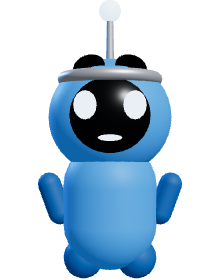
CompanIA is a desktop assistant for macOS and Windows: a 3D character in a floating window above your screen, with the Claude agent running inside the app itself and real local tools. Reminders, notes, routines, opening apps. It's being built in public, and the mascot window already runs.
- macOS
- Windows
The problem
You use AI all day. It still lives on the other side of a tab.
To ask for anything you switch windows, paste context, read the answer, and come back to do by hand whatever you agreed on. You create the reminder. You open the app. You save the note. It's an assistant that knows a lot and can reach nothing. And it's always the same one, in the same tone, filing what you told it about your blood test next to what you told it about your cash flow. CompanIA goes the other way: visible in a corner of your screen, with hands inside the system, split into specialists that don't share a memory.
It sits in front of you and never steals a click
The window is transparent, frameless, always on top. And it ignores the mouse by default. When your cursor enters the character's body, a hit-test hands the click back to the window. Drag it to whatever corner you want and the position is remembered per monitor; a global shortcut hides it. That isn't a promise: it's a finished phase, measured on Windows 11. The whole app, React and three.js and animated mascot included, costs about 70 MB above an empty Electron window.
You ask, and it happens outside the chat
"Remind me about the bill at 3." "Note that the meeting moved." "Open Figma." In a browser that becomes text for you to act on. Here it becomes a tool call: the agent runs in the app's main process, and creating a reminder, taking a note, opening an app and scheduling a routine are local functions with validated input, firing on your machine. Long tasks go to a queue. The character shifts into a working state and the conversation keeps going. Next phase on the roadmap.
Hold a shortcut and talk
Global push-to-talk: hold, speak, release. Audio goes to transcription, the reply streams back and is synthesised sentence by sentence. It starts speaking before it finishes thinking. The character's mouth follows the audio, and talking over it cuts it off. Voice lands in a later phase and belongs to the paid plans; it doesn't exist today.
Each specialist only knows its own half
Volt handles tech, Grana money, Kai health and habits, Luna focus. It isn't one AI wearing four hats: each character is a persona file with tone, voice, 3D model, and a closed list of tools. History and memory are kept separate in the local database. What you told Grana never surfaces in a conversation with Kai. And the tool limit isn't a polite request in the prompt: it lives in the agent service. Prompts can be talked around; code can't.
Your conversations stay on your disk
Conversations, memories, reminders and notes live in a local database on your machine. It isn't sync that ships turned off. It's where the data is born. No AI key lives in the app: calls go through a backend that checks your session and quota, and the key stays there. Telemetry only after you agree, and nothing leaves before that.
Later, you build your own and sell it
A future phase, and only once the core stands: a Studio inside the app to assemble your character from official parts, write its personality, and publish. The community installs, rates and ranks it, and the creator keeps 70% of what they sell. The rule that stops this becoming a malware channel: a community agent is data, never code. Validated persona and assets only, tools from a safe list, with the platform's security layer on top.
Frequently asked
- Isn't this just another desktop pet?
- The character is the interface, not the product. Behind it is an agent with tools that touch your machine and memory that persists between sessions. And there's a rule written into the project: the mascot never interrupts you on its own with a speech bubble. At most it changes pose. You speak first.
- Isn't an AI that opens apps on my machine dangerous?
- That's why the tool limit is enforced in the agent service rather than requested in the prompt: a tool that isn't in the persona simply doesn't exist for that session. Community agents are never executable code, only validated persona and assets, with an even smaller tool set. And anything sensitive asks for confirmation in a native window, outside the conversation.
- Do I need an Anthropic key? What does it cost?
- You need no key at all: AI cost is part of the subscription and the app talks to the backend, never straight to the model. There will be a free plan with one character and text. Paid pricing is still being validated. When it settles, the list hears first, without the countdown-timer theatre.
- When does this ship?
- I won't guess a date. What exists today: the animated mascot window, click-through, drag with a remembered position, tray, global shortcut, and the tested internal communication contract. All running on Windows, with automated tests and a memory measurement. Still missing: conversation, voice, tools, accounts and billing, and signed installers. One developer, AI-accelerated build, and the list gets each step with a real screenshot.
- Electron
- React
- TypeScript
- three.js
- Claude Agent SDK
- SQLite
- Supabase
- Stripe